


Autoclave manufacturing is one of the core processes for producing high-performance carbon fiber composite products. It is mainly used to produce structural components with extremely high requirements for performance, quality, consistency, and reliability, such as wing skins, flaps, ailerons, rudders, fairings, doors, and fuselage sections. These carbon fiber components in the Boeing 787 and Airbus A350 are all manufactured using autoclave manufacturing.In addition, most carbon fiber components such as satellite supports, antenna reflectors, rocket engine casings, fairings, and sections, as well as helicopter rotor blades and fuselage structures, are also manufactured using autoclave technology. Furthermore, some high-performance areas of large wind turbine blades, such as the main beam cap and key load-bearing parts, are made using prepreg + autoclave technology.
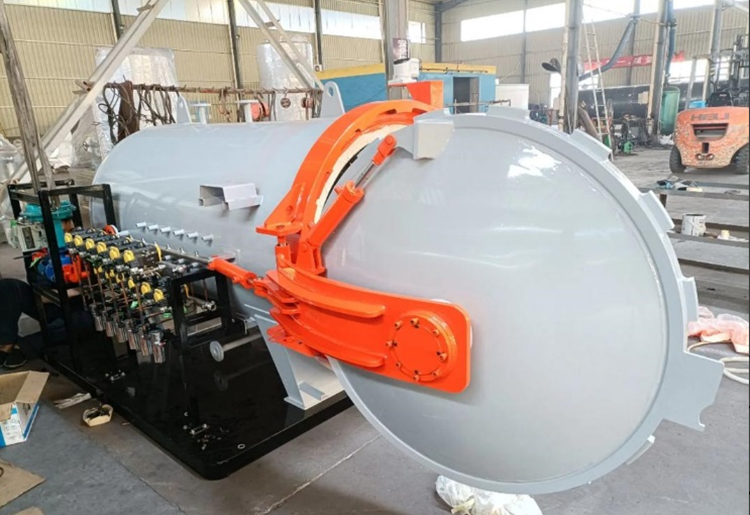
Beyond the aerospace field, autoclave technology also shines in the high-end civilian product sector. For example, top-of-the-line road bikes, mountain bikes, F1 racing monocoques, rowing oars, sailboat masts, golf club shafts, high-end tennis rackets, skis, and ski poles are all made using autoclave technology. It also plays a crucial role in high-end carbon fiber medical bed boards, X-ray examination bed boards, and orthopedic braces in medical equipment.
In recent years, components requiring high specific strength and high rigidity, such as robotic arms and precision instrument supports, have also been made of carbon fiber, and are manufactured using autoclave technology.
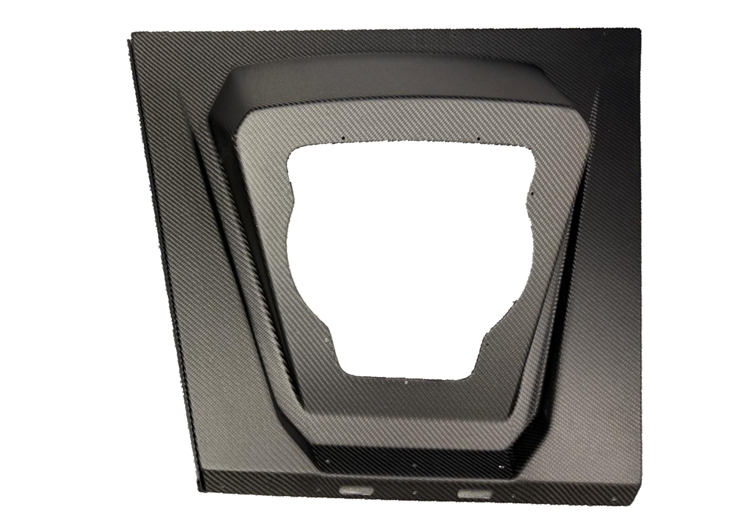
Advantages of Autoclave Process
- Extremely high fiber volume content and mechanical properties. Under high temperature and pressure, the resin exhibits excellent fluidity, fully impregnating the fibers and extruding excess resin and air bubbles. The resulting composite material boasts the highest density (porosity typically below 1%) and optimal mechanical properties.
- Excellent product quality consistency. Uniform temperature and pressure within the autoclave allow for precise control, making it suitable for producing large, complex curved components with good batch stability.
- Excellent surface quality. Under smooth mold surface and uniform pressure, the surface in contact with the mold (surface A) achieves a very high degree of smoothness.
- Suitable for complex structures. Through the flexible laying of auxiliary materials (breathable felt, vacuum bags, etc.), complex configurations such as integrated ribs, core structures, etc., can be formed in one step.
In summary, the autoclave process represents the “pinnacle” of carbon fiber composite molding and is synonymous with high performance.


